How to buy, sell, and trade Pokémon cards
Compare physical Pokémon card transactions with trading TCGX index exposure, then explore how each route works and where to use it.

You can buy, sell, or swap Pokémon cards through marketplaces, local card shops, and collector communities. If your goal is to trade card-market price movements, there is another route: trading a contract linked to a card index rather than buying the physical cards.
TCGX is an index of selected cards across Pokémon, Magic: The Gathering, One Piece, and Disney Lorcana. Trading it gives exposure to that broader basket. Choosing between physical cards and index trading starts with what you want to own or trade; they provide different exposure and involve different costs.
Start with what you want to do
| Your goal | Route | What changes hands |
|---|---|---|
| Own a particular card for collecting, play, or resale | Buy the physical card | Ownership of that copy |
| Sell cards you already own | Find a buyer through a shop, marketplace, or direct sale | Your cards in exchange for the agreed payment |
| Exchange cards with another collector | Arrange a physical swap | Ownership of the agreed cards |
| Trade broader card-market price movements | Trade a contract linked to TCGX | A financial position referencing a multi-game basket |
Buying a card can serve both collecting and financial goals. Index trading is an alternative for taking price exposure, but it does not sell an existing collection or obtain a particular card for you.
Physical cards and index trading: two kinds of exposure
With a physical purchase, you choose the exact Pokémon card or sealed product. Its resale value depends on that item's printing, condition, demand, and available buyers. You own the item, and a fully paid purchase has no perpetual funding or margin-liquidation requirement.
With TCGX, you trade exposure linked to a selected basket rather than choosing and reselling individual cards. Pokémon is part of that basket, alongside three other games, so its movement can differ from a Pokémon-only collection. The trading-card index guide explains the basket and weights.
The costs differ too. Physical transactions can involve selling fees, delivery, storage, and grading. Index trading involves execution costs and funding, and collateral must support the position. Neither a physical sale nor a contract exit is guaranteed at the price shown in a guide or chart.
How trading TCGX works
A TCGX position is a perpetual contract linked to the index. A long gains from a rise between its entry and exit prices; a short gains from a fall, before costs and funding. The price at which the contract trades can differ from the published index.
For a simple linear example, one unit bought at 100 and sold at 105 produces a price gain of 5; selling it at 95 produces a loss of 5. Position size scales that result. This illustrates contract prices, not a forecast or the return from owning cards.
You post collateral to support the position. Funding can be paid or received over time, and insufficient margin can lead to liquidation. Trading does not deliver cards or a claim on stored inventory. Data or liquidity problems can also restrict trading or make an exit unavailable. Spot vs perpetual futures explains how these obligations differ from physical ownership.
Where to trade TCGX
TCGX is available on N1. Review the current quote, funding, trading costs, collateral requirements, and market availability when comparing this route with physical ownership.
Where to buy Pokémon cards
Retailers and local card shops sell sealed products such as booster packs and boxes. In the US and Canada, Pokémon Support points buyers to Pokémon Center and its retail locator. A pack gives you an uncertain selection of cards; buying an individual card, often called a single, lets you choose the exact copy or variant offered. Opening a pack does not guarantee the card you want.
Marketplaces such as TCGplayer, Cardmarket, and eBay also list individual cards. Availability, supported countries, seller requirements, fees, and buyer protections differ. Check the current terms for your location rather than treating every marketplace as interchangeable.
Before comparing offers, match the card name, set, collector number, language, printing, finish, and condition. A graded copy also needs its grading company and grade identified. A photo of the same character is not enough to establish that two listings offer the same thing.
The advertised amount is only one part of the purchase. Delivery, applicable taxes, and the seller's return terms can change the total cost and what happens if the card arrives differently from its description.
Where to sell Pokémon cards
An online marketplace lets sellers reach buyers outside their area, subject to its listing and transaction rules. A local shop may make a direct purchase offer or offer store credit. A card show can bring buyers and sellers together, but admission fees, travel, and individual sellers' terms still matter.
A shop's offer, a marketplace listing, and a completed sale answer different questions. An offer is an amount someone is currently prepared to pay on specified terms. A listing is an asking price. A completed sale is evidence of an earlier agreement for a particular copy. None is a universal valuation of every copy of that card.
Consider this hypothetical example: a card is listed for $100, another equivalent copy recently sold for $85, and a shop offers $65. Those numbers need not indicate an error. The shop may account for its resale costs and inventory risk, while the listing has not yet attracted a buyer. Compare net proceeds and terms, rather than assuming the highest visible number is money you can receive.
Read asking price vs sold price for a fuller explanation of comparable price evidence.
Where and how to trade Pokémon cards
Physical swaps commonly take place through card shops, collector events, and online communities. Pokémon's event locator can help identify organized play venues. An event listing does not establish that trading is permitted there; ask the organizer about its rules.
For a swap, agree on the exact cards and their condition, then compare both sides using equivalent evidence. In an illustrative trade, one $40 card could be exchanged for two cards with comparable recent sales of $25 and $15. The totals match, but three separate cards may differ in demand, condition, and how readily they can find a buyer. Equal reference totals do not make the trade suitable for everyone.
For an online exchange, check community rules, counterparties' records, and the agreed handover process. Avoid assuming that platform protections cover an arrangement conducted outside that platform. The physical-card process is also separate from trading in Pokémon TCG Pocket; use Pokémon's Pocket trading FAQ for the app's rules.
For a closer look at ownership and financial exposure, read how to invest in Pokémon cards.
Sources
Keep learning
Read the N1 docs ↗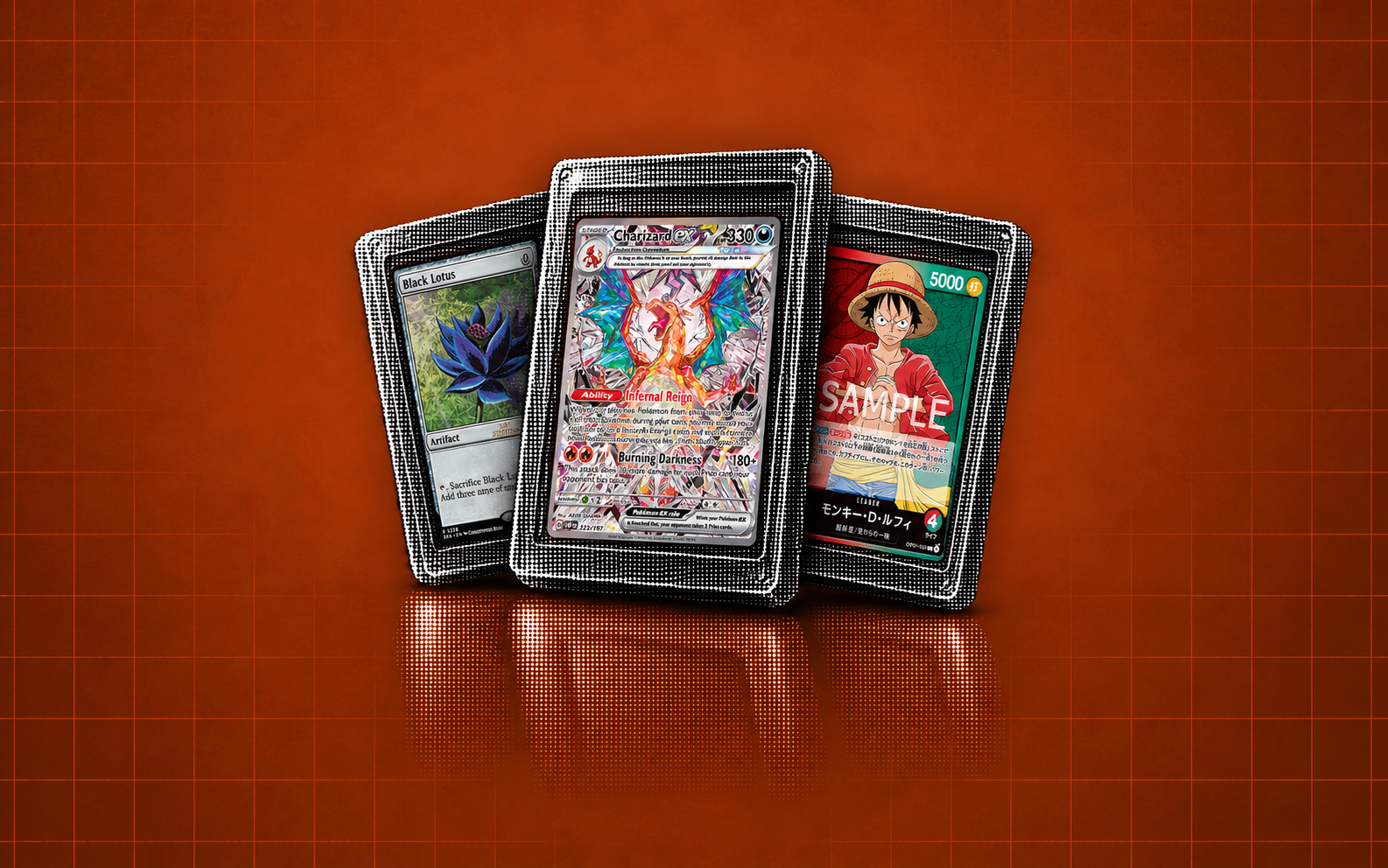
What is a trading card index? Understanding TCGX
Learn how a trading card index measures a selected basket, how TCGX works, and how index exposure differs from buying, selling, or swapping cards.
Read the guide →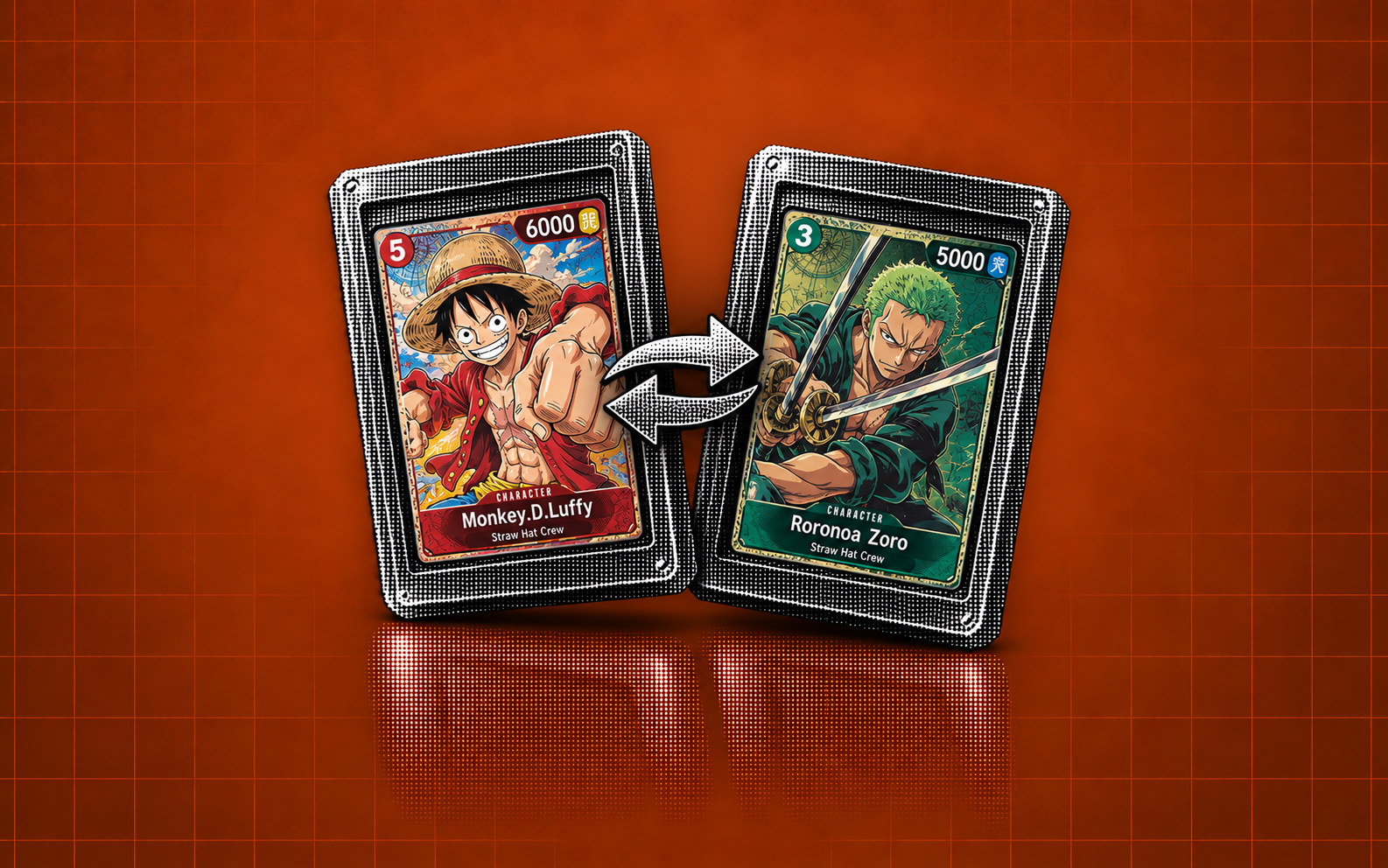
How to buy, sell, and trade One Piece cards
Explore physical One Piece card transactions and broader TCGX index trading, with their different exposure, costs, and practical steps.
Read the guide →
Why do trading card prices rise and fall?
Explore how supply, demand, condition, and price evidence affect trading card markets, and why individual cards can move differently from an index.
Read the guide →