Can you short Pokémon cards? Understanding card-market exposure
Explore short exposure to trading-card prices through TCGX, how it differs from selling Pokémon cards, and the risks of a multi-game index.
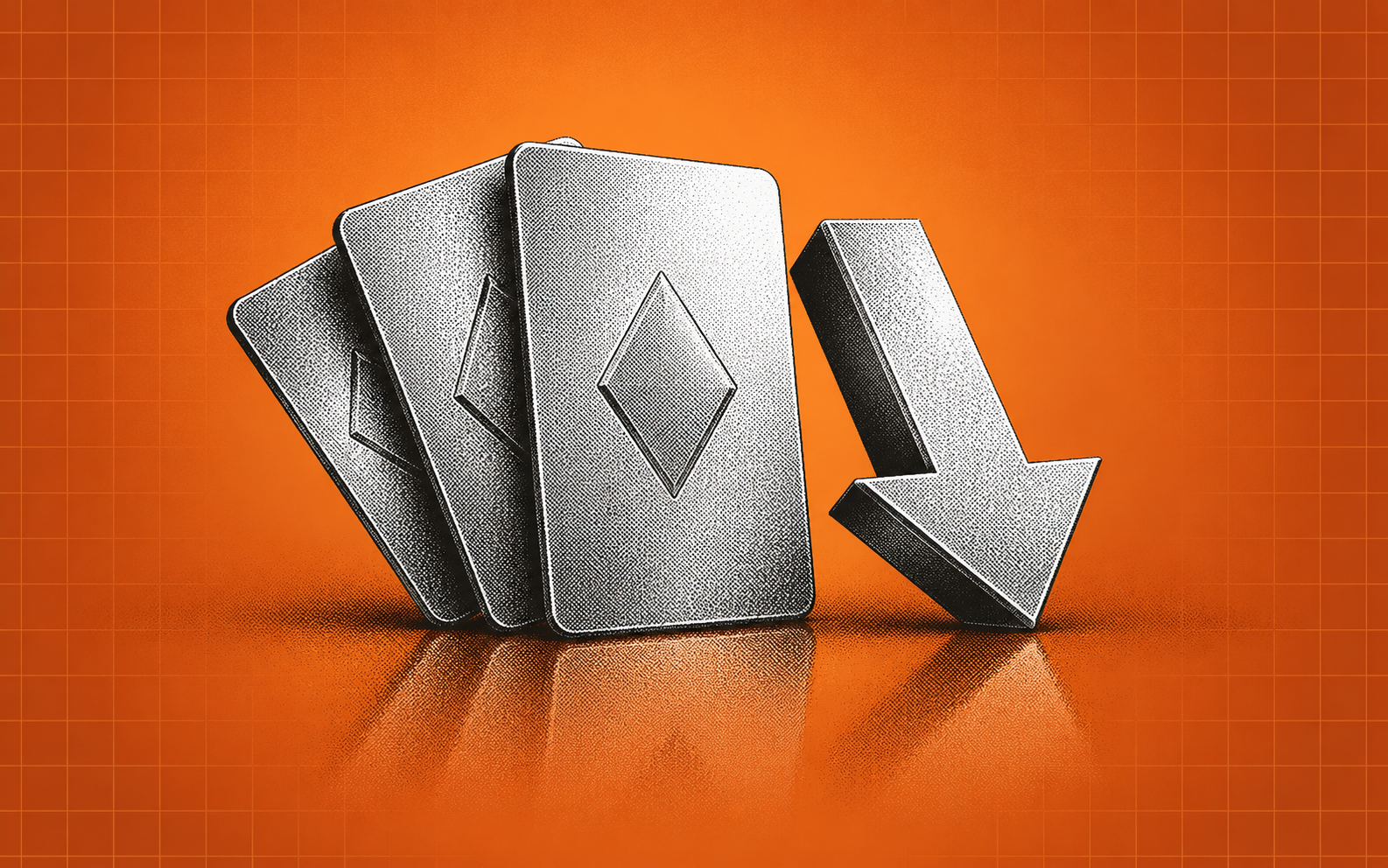
You can take a short position in TCGX, a trading-card index that includes Pokémon. That gives you exposure to a fall in a selected basket of card prices. It is different from shorting a particular Charizard card or trading a Pokémon-only index.
The distinction matters because “short Pokémon cards” can mean several things: selling a collection before prices fall, borrowing a specific card to sell and replace later, or trading against broader card-market prices. Each creates a different position.
Selling your cards and shorting are different
If you sell a card you own for $200, you exchange the card for cash. If its price later falls to $150, you avoided holding it through that decline. You do not automatically receive another $50 when the price falls. Your sale was complete when ownership changed hands.
A short position remains exposed after it is opened. It gains from a fall in the relevant trading price and loses from a rise, before costs. Closing the position realizes that price difference. Our long vs short guide explains the basic mechanics.
| What you want to do | Relevant route | What remains exposed |
|---|---|---|
| Turn cards you own into cash | Sell the physical cards | No continuing exposure to the cards sold |
| Trade a decline in one specific card | A borrowing or contract arrangement tied to that card would be needed | That arrangement's defined card and terms |
| Trade a decline in a broader selected basket | Short a contract referencing TCGX | A multi-game index, including Pokémon |
For physical selling channels, see how to buy, sell, and trade Pokémon cards.
Why shorting a single card is complicated
In a conventional borrowed-asset short, someone borrows an asset, sells it, then buys it back to return to the lender. Applying that idea to collectible cards would require agreement about exactly what must be returned: the printing, language, condition, grade, and potentially the specific copy.
A card listing is not a borrowing facility. Finding a buyer for a borrowed card would also not guarantee that an acceptable replacement will be available later. Borrowing charges, collateral, custody, damage, and return deadlines would need their own terms. This article does not identify a retail service offering those arrangements for individual Pokémon cards.
Index trading addresses a different question: taking a position on a defined basket without sourcing and delivering the physical copies.
What a short TCGX position represents
TCGX combines price observations for selected variants across Pokémon, Magic: The Gathering, One Piece, and Disney Lorcana. The published methodology reviewed on October 11, 2026 assigns Pokémon 45% of the index weight. Those weights can change; they are not shares of card-market sales volume.
A short TCGX position therefore expresses a view on the combined basket. Pokémon prices could fall while other parts of the basket rise. A particular rare card could move in the opposite direction from the index. The trading-card index guide explains selection, weights, and the difference between reference prices and actual sales.
The position is a perpetual contract. You do not borrow the constituent cards, receive ownership of them, or owe physical cards when you close it. Collateral supports the financial position, and funding can be paid or received while it remains open.
A worked short-position example
Suppose an illustrative quote-settled linear contract trades at 100. A trader opens a short representing 10 units, with an entry notional of $1,000. Assume each one-point move is worth $1 per unit. These are teaching assumptions, not TCGX order-size specifications or live prices.
| Closing execution price | Calculation before costs | Price profit or loss |
|---|---|---|
| 90 | 10 × (100 − 90) | $100 gain |
| 110 | 10 × (100 − 110) | $100 loss |
The relevant prices are the executions at entry and exit. An index display of 90 does not guarantee a closing fill at 90. Fees and funding change the final result. If margin becomes insufficient before the planned exit, liquidation can close exposure earlier.
Can it hedge a Pokémon collection?
A short may offset some losses if the collection and the traded contract fall together. It is an imperfect relationship, not insurance for the collection's value.
Imagine a collection falls by $200 while the short position gains $80 before costs. The combined price result is still a $120 loss. If the collection falls while the contract rises, both positions can lose. The mismatch between the exposure owned and the exposure hedged is one form of basis risk.
A further practical issue is cash flow: physical cards in a binder do not automatically meet a derivative account's margin requirements. A short can require additional collateral during a rise even if its owner expects card prices to fall later. Hedging explained covers these trade-offs in more detail.
Where to trade TCGX
TCGX is available on N1. Check eligibility, the current market state, executable prices, available size, funding, and margin requirements before placing an order. An index level or open-interest cap is not a promise of liquidity.
The useful question is which exposure matches your view: a specific physical card, your own collection, or the basket referenced by TCGX. The name of the card game alone does not make those exposures interchangeable.
Sources
The basket and market distinctions above follow the TCGX specification and perpetual market mechanics, reviewed October 11, 2026. Examples are hypothetical and exclude fees and funding unless stated.
Keep learning
Read the N1 docs ↗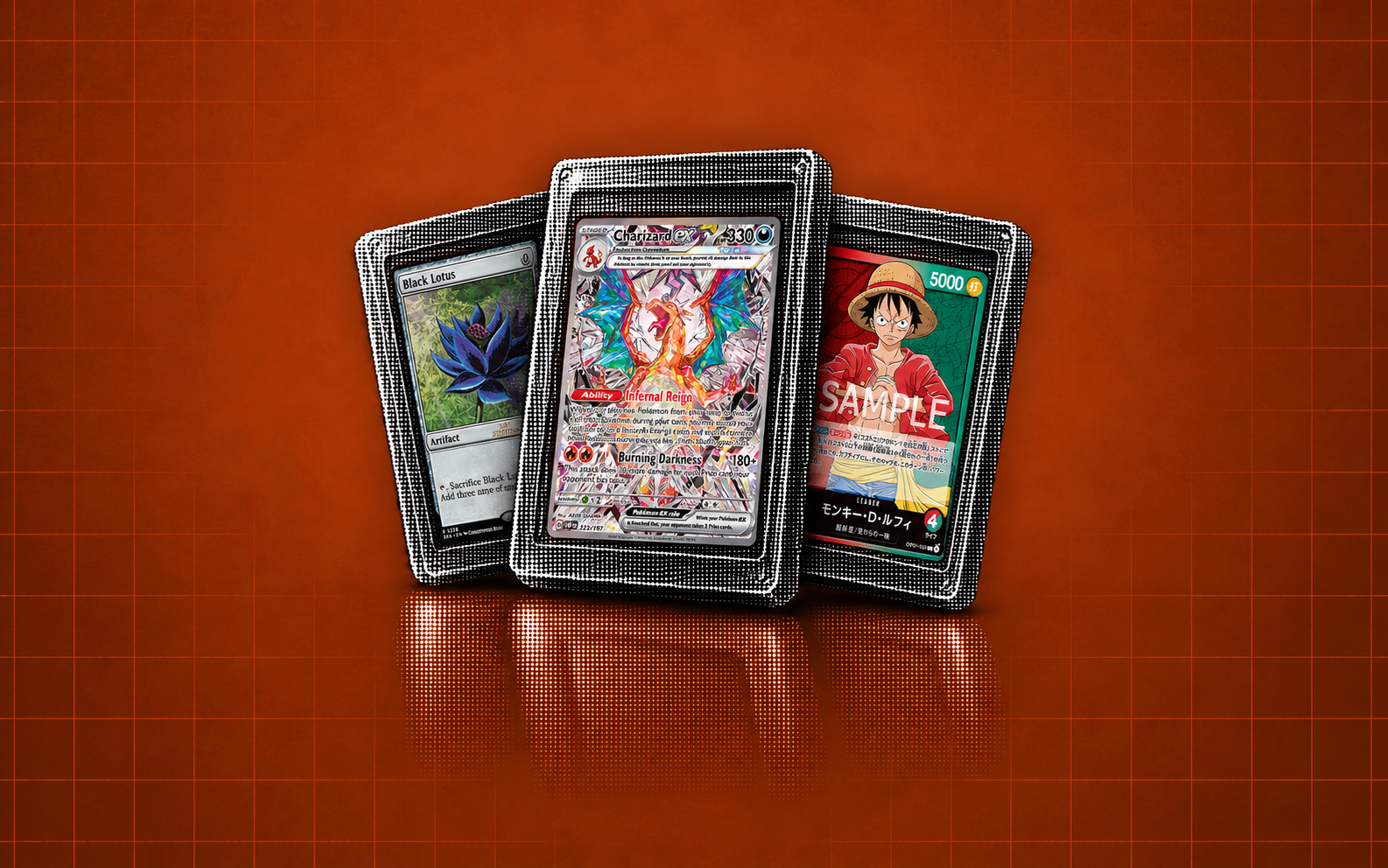
What is a trading card index? Understanding TCGX
Learn how a trading card index measures a selected basket, how TCGX works, and how index exposure differs from buying, selling, or swapping cards.
Read the guide →
How to buy, sell, and trade Pokémon cards
Compare physical Pokémon card transactions with trading TCGX index exposure, then explore how each route works and where to use it.
Read the guide →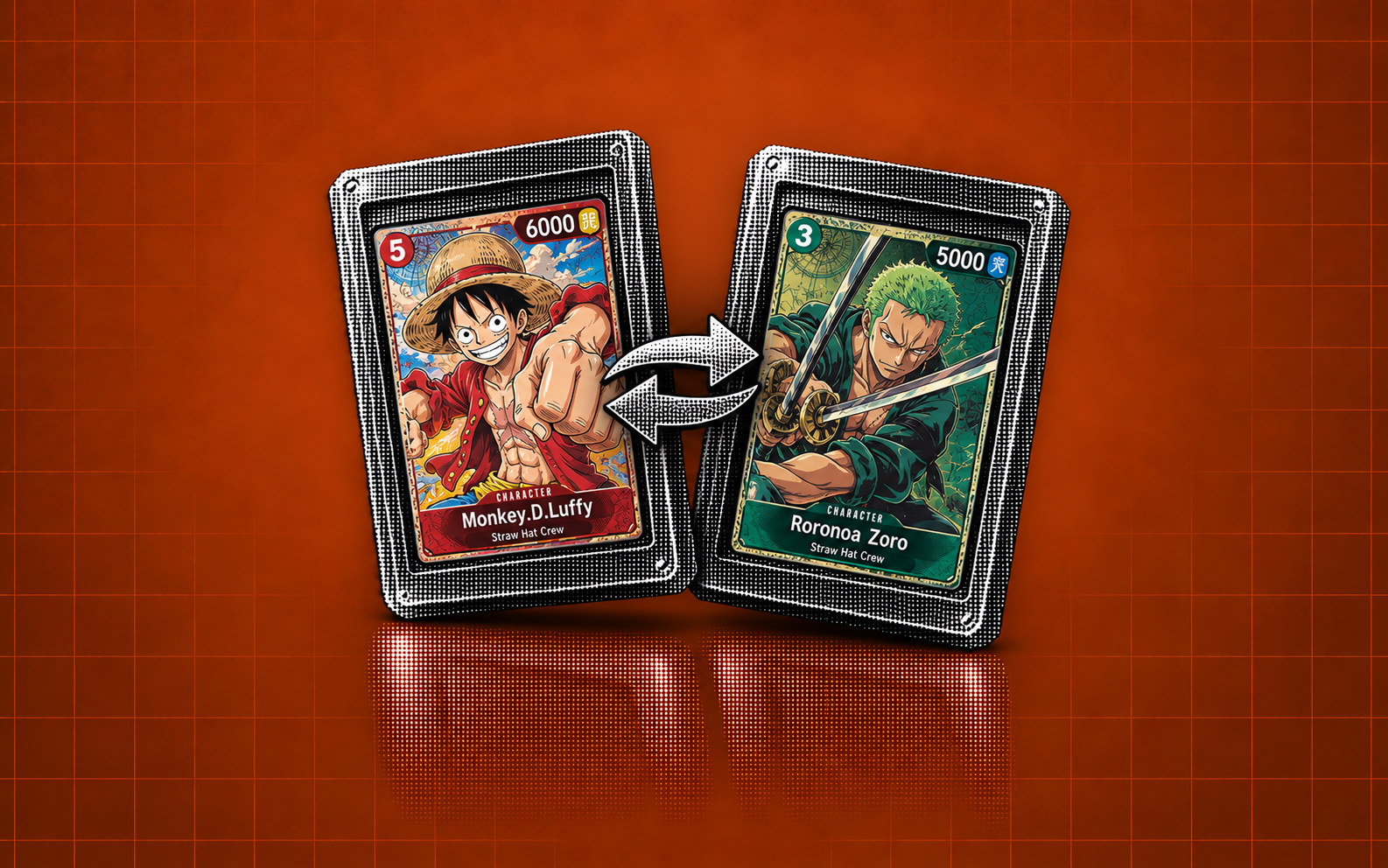
How to buy, sell, and trade One Piece cards
Explore physical One Piece card transactions and broader TCGX index trading, with their different exposure, costs, and practical steps.
Read the guide →